
For a long time, CHEP and PECO pallets were just another line item in my operations. We shipped, we invoiced, we moved on. Nothing strategic. Nothing urgent.
Until the day I decided to take a closer look at the records.
What I saw struck me. Accumulating rental fees. Penalties for exceeding deadlines. Discrepancies that were never reconciled. Month after month. Discreetly. Without a fuss.
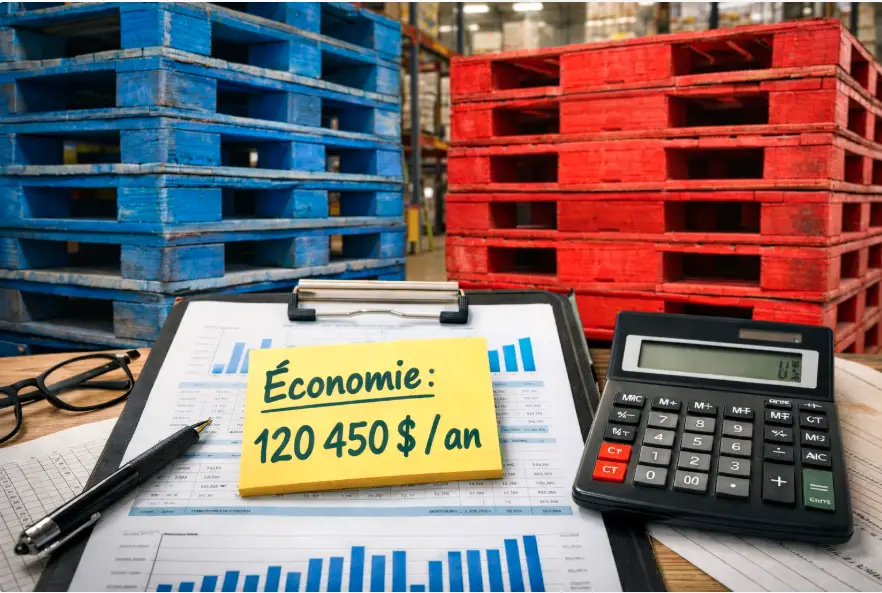
Adding it all up, we were talking about $120,450 a year.
Not because of a major problem. Because of a lack of structure. Returnable pallets aren’t just a logistical support. They’re leased assets. Every day counts. Every movement must be recorded. Every transfer must be validated. Otherwise, the meter keeps running.
In our case, the goods were being shipped correctly. Sales were going well. But no one was really managing the pallet lifecycle. The declarations were being made late. Customer confirmations weren’t systematic. Discrepancies went unnoticed because they were spread across multiple invoices.
We weren’t losing $120,000 all at once.
We were losing it little by little.
The fix wasn’t technological. It was operational.
We appointed a clear person responsible for pallet accounts. A single accountant. Mandatory monthly follow-up. Every statement was reconciled with our actual shipments. Every discrepancy was analyzed and challenged quickly. Not six months later. Not “when we have time.”
We also incorporated pallet rotation into our customer discussions. Return times became a sales point, not an administrative detail. Some customers were surprised at first. But very quickly, the message got through: pallets aren’t free.
At the same time, we started tracking a simple metric: the average number of days in circulation per pallet. This figure changed our perspective. He highlighted slow customers, unclear processes, and gray areas.
In less than a year, penalties plummeted. Rental costs decreased. Discrepancies became marginal. And recurring savings reached $120,450 per year.
Without a new system.
Without a major project.
Without a dramatic transformation.
Just with discipline, visibility, and clear accountability.
Over the years, I’ve come to understand that the biggest savings don’t always come from large strategic projects. They often come from operational blind spots that we accept as “normal.”
CHEP and PECO pallets can be a silent cost center… or a powerful optimization lever.
It all depends on whether we decide to manage them as a simple logistical formality or as a strategic asset.
Frozen LTL Shipping in Quebec: The Complete Guide to Reliable Carriers